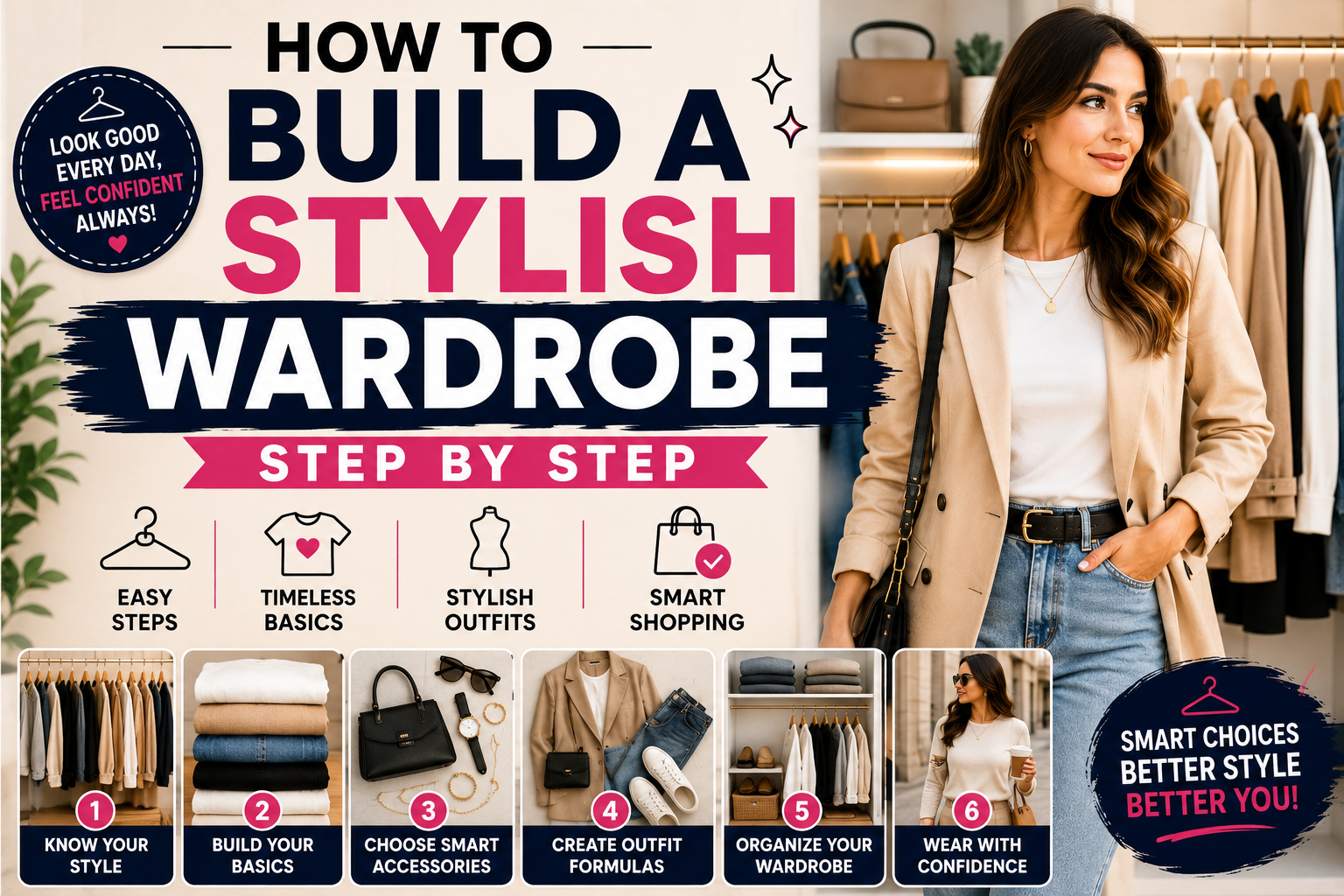
How to Build a Stylish Wardrobe Step by Step
Building a stylish wardrobe does not mean buying many expensive clothes. A good wardrobe is simple, useful, comfortable, and easy to style. When your wardrobe is organized properly, getting dressed becomes faster and your outfits look more polished every day.
Many people struggle with fashion because they buy random clothes without a clear plan. Some pieces look good in the store but do not match anything at home. Others are trendy for a short time but become difficult to wear later. A stylish wardrobe should include clothes that fit well, match your lifestyle, and can be worn in different ways.
In this step-by-step guide, you will learn how to build a stylish wardrobe from the beginning. These tips are practical, budget-friendly, and suitable for everyday fashion.
Step 1: Understand Your Lifestyle
Before buying new clothes, think about your daily routine. Your wardrobe should match your real life, not only what looks good online.
Ask yourself these simple questions:
Where do I go most often?
Do I need casual, work, college, travel, or formal outfits?
What clothes do I feel most comfortable wearing?
What type of shoes do I actually use?
Which colors do I wear again and again?
For example, if your routine is mostly casual, you need jeans, T-shirts, shirts, sneakers, and light jackets. If you work in an office, you may need trousers, blazers, button-down shirts, loafers, and clean accessories.
A stylish wardrobe should support your lifestyle instead of making dressing difficult.
Step 2: Clean Out Your Current Wardrobe
The next step is to review the clothes you already own. Take everything out and check each item carefully.
Keep clothes that:
Fit well
Feel comfortable
Match your style
Can be worn in multiple outfits
Are clean and in good condition
Remove or donate clothes that:
No longer fit
Feel uncomfortable
Are damaged beyond repair
Do not match your lifestyle
Have not been worn for a long time
This step helps you understand what you already have and what you actually need. Many people discover useful basics in their wardrobe after organizing everything properly.
Step 3: Define Your Personal Style
Personal style is the type of fashion that feels natural to you. It can be classic, casual, elegant, sporty, minimal, bold, feminine, modern, or smart-casual.
To find your style, look at outfits you already enjoy wearing. Notice the colors, fits, and clothing types that make you feel confident.
You can also create a small inspiration folder with outfit photos. Look for patterns. Maybe you like neutral colors, wide-leg pants, simple shirts, denim jackets, or clean sneakers.
Your personal style does not need to follow every trend. It should reflect your comfort, personality, and daily routine.
Step 4: Start with Wardrobe Basics
Wardrobe basics are simple clothing items that can be styled in many ways. These pieces are the foundation of a stylish wardrobe.
Useful wardrobe basics include:
White T-shirt
Black T-shirt
Plain button-down shirt
Blue jeans
Black jeans
Black trousers
Neutral blazer
Denim jacket
Comfortable sneakers
Loafers or flats
Simple dress
Everyday handbag or backpack
Basic watch
Neutral belt
These basics make outfit planning easier because they match with many other pieces. A white shirt can be worn with jeans, trousers, skirts, blazers, or layered under sweaters. Black trousers can work for office outfits, dinner looks, and smart-casual styling.
Step 5: Choose a Simple Color Palette
A wardrobe becomes easier to style when the colors work together. Start with neutral colors, then add a few accent colors.
Good neutral colors include:
Black
White
Beige
Cream
Grey
Navy
Brown
Olive
Accent colors can include:
Soft pink
Light blue
Burgundy
Emerald green
Mustard yellow
Red
Lavender
For beginners, choose three or four main neutral colors and one or two accent colors. This makes it easier to mix and match clothes without overthinking.
For example, a wardrobe based on black, white, beige, and blue can create many clean outfits.
Step 6: Focus on Fit
Fit is one of the most important parts of style. Even simple clothes can look stylish if they fit well. Clothes that are too tight, too loose, or uncomfortable can make an outfit look less polished.
Check these areas:
Shoulders should sit correctly on shirts and jackets.
Pants should feel comfortable around the waist.
Sleeves should not be too long.
Dresses and tops should allow easy movement.
Jeans and trousers should match your preferred shape.
You do not need every item to be perfectly tailored, but your clothes should look balanced on your body. Good fit instantly improves your full appearance.
Step 7: Buy Versatile Pieces
A stylish wardrobe should include clothes that can be worn in different ways. Before buying anything new, ask yourself:
Can I wear this with at least three items I already own?
Can I style it casually and smart-casually?
Does it match my color palette?
Will I wear it more than once?
For example, a beige blazer is versatile because it can be worn with jeans, trousers, dresses, skirts, and basic tops. A very bright printed jacket may look interesting but might be harder to style often.
Buying versatile pieces helps you save money and create more outfits with fewer clothes.
Step 8: Build Outfit Formulas
Outfit formulas are simple combinations that work again and again. They make dressing easier, especially on busy days.
Some useful outfit formulas include:
T-shirt + jeans + sneakers
Button-down shirt + trousers + loafers
Blazer + basic top + straight pants
Dress + denim jacket + sneakers
Sweater + jeans + boots
Blouse + wide-leg pants + flats
Once you know your favorite outfit formulas, you can repeat them with different colors, shoes, and accessories.
For example, a T-shirt, jeans, and sneakers can look casual with a denim jacket or more polished with a blazer.
Step 9: Add Layers
Layering makes a wardrobe more stylish and practical. Layers can change the mood of an outfit and help you dress for different weather.
Useful layering pieces include:
Blazer
Denim jacket
Cardigan
Lightweight jacket
Overshirt
Trench coat
Sweater
Long coat
A plain T-shirt can look more stylish with a blazer. A simple dress can look casual with a denim jacket. A button-down shirt can be layered under a sweater for a polished look.
Choose layers in neutral colors first because they are easier to match.
Step 10: Invest in Good Shoes
Shoes can improve or weaken an outfit. You do not need many pairs, but you should have clean and practical shoes that match your lifestyle.
Useful shoe options include:
White sneakers for casual outfits
Black shoes for smart-casual looks
Loafers or flats for everyday polished outfits
Comfortable sandals for warm weather
Boots for cooler weather
Simple dress shoes for special occasions
Keep your shoes clean and in good condition. A simple outfit can look much better with neat shoes.
Step 11: Use Accessories Wisely
Accessories help complete your outfit. They can make basic clothes look more stylish without requiring a full wardrobe change.
Useful accessories include:
Watch
Belt
Sunglasses
Scarf
Simple jewelry
Handbag
Backpack
Cap
Hair accessories
The key is balance. Do not wear too many accessories at once. Choose one or two pieces that match the outfit and occasion.
For example, a plain shirt and jeans can look more polished with a belt, watch, sunglasses, and clean shoes.
Step 12: Add Statement Pieces Slowly
Once you have basics, you can add statement pieces. A statement piece is something that stands out, such as a printed scarf, colorful bag, bold jacket, unique shoes, or patterned shirt.
Do not buy too many statement items at the beginning. Start with one or two pieces that match your wardrobe.
A good rule is to keep the rest of your outfit simple when wearing a statement piece. If your scarf is colorful, keep your clothes neutral. If your shoes are bold, keep your outfit clean and balanced.
Step 13: Organize Your Wardrobe Properly
An organized wardrobe helps you see what you own and create outfits faster. If your clothes are messy, you may forget useful pieces and buy things you do not need.
You can organize your wardrobe by:
Clothing type
Color
Season
Workwear and casual wear
Most-used items
Keep everyday basics easy to reach. Store special occasion outfits separately. Fold or hang clothes properly to avoid wrinkles.
A clean wardrobe makes your personal style more consistent.
Step 14: Plan Outfits in Advance
Outfit planning saves time and helps you avoid last-minute stress. You can plan outfits for work, travel, events, or the whole week.
Try this simple method:
Choose your main clothing item.
Add matching bottoms or top.
Pick shoes.
Add one accessory.
Check the weather and occasion.
For example, if you choose black trousers, you can add a white shirt, beige blazer, loafers, and a watch. This creates a clean and stylish look with very little effort.
Step 15: Shop with a List
Shopping without a plan often leads to unnecessary purchases. Before shopping, make a list of what your wardrobe actually needs.
Your list might include:
One white shirt
One pair of black trousers
One neutral blazer
One pair of clean sneakers
One everyday bag
Avoid buying clothes only because they are on sale. A cheap item is not useful if you never wear it.
Smart shopping means buying clothes that match your style, fit well, and work with what you already own.
Step 16: Choose Quality Over Quantity
A stylish wardrobe does not need to be large. It is better to have fewer useful pieces than many clothes you rarely wear.
Quality does not always mean expensive. It means the item fits well, feels comfortable, holds its shape, and can be worn many times.
Before buying, check the fabric, stitching, buttons, zipper, and overall comfort. A simple, well-made item can improve your wardrobe more than several low-quality pieces.
Step 17: Learn Basic Color Matching
Color matching helps your outfits look balanced. You do not need advanced fashion knowledge. Simple combinations are enough.
Easy color combinations include:
White and blue
Black and beige
Grey and white
Navy and cream
Brown and beige
Olive and white
Black and grey
Try to keep your outfit limited to two or three main colors. This makes your look cleaner and easier to style.
Step 18: Take Care of Your Clothes
Clothing care is an important part of building a stylish wardrobe. Clean and well-maintained clothes always look better.
Simple clothing care tips include:
Wash clothes according to care labels.
Iron or steam wrinkled clothes.
Store shoes properly.
Repair loose buttons.
Remove stains quickly.
Fold knitwear instead of hanging it.
Keep bags clean and shaped.
Taking care of your clothes helps them last longer and saves money over time.
Step 19: Update Your Wardrobe Seasonally
You do not need to change your entire wardrobe every season. Small updates are enough.
For warm weather, you may add linen shirts, cotton dresses, sandals, and light colors. For cooler weather, you may add sweaters, coats, boots, and layered outfits.
Review your wardrobe every few months. Remove items you no longer wear and note what is missing.
Seasonal updates keep your wardrobe fresh without overspending.
Step 20: Stay True to Your Comfort
The best wardrobe is the one that makes you feel comfortable and confident. Do not force yourself to wear clothes that do not match your personality or lifestyle.
Fashion should make your daily routine easier, not harder. If you feel uncomfortable in an outfit, it will show in your body language.
Choose clothes that help you move easily, feel confident, and express your personal style naturally.
Stylish Wardrobe Essentials for Women
A stylish wardrobe for women can include:
White shirt
Basic T-shirts
High-waist jeans
Wide-leg trousers
Midi dress
Neutral blazer
Denim jacket
Cardigan
Comfortable sneakers
Flats or loafers
Simple sandals
Everyday handbag
Small earrings
Scarf
These pieces can create casual, smart-casual, office, travel, and dinner outfits.
Stylish Wardrobe Essentials for Men
A stylish wardrobe for men can include:
Plain T-shirts
Polo shirts
Button-down shirts
Blue jeans
Black jeans
Chinos
Neutral trousers
Denim jacket
Blazer
Clean sneakers
Loafers
Casual shoes
Watch
Belt
Sunglasses
These pieces are easy to style for casual days, work, travel, and smart-casual occasions.
Common Wardrobe Mistakes to Avoid
Avoid buying clothes without checking if they match your wardrobe.
Avoid keeping too many clothes you never wear.
Avoid ignoring fit.
Avoid buying only trend-based items.
Avoid choosing colors that are hard to match.
Avoid keeping damaged clothes in your main wardrobe.
Avoid shopping without a list.
Avoid copying someone else’s style completely.
A stylish wardrobe should be practical, personal, and easy to use.
Simple Wardrobe Checklist
A good wardrobe should have:
Comfortable basics
Neutral colors
Good-fitting clothes
Clean shoes
Useful accessories
Layering pieces
Outfits for daily life
A few special occasion pieces
Organized storage
Clothes that match your lifestyle
If your wardrobe has these elements, dressing well becomes much easier.
Conclusion
Building a stylish wardrobe step by step is not about buying more clothes. It is about choosing better pieces, organizing what you already own, and creating outfits that match your lifestyle.
Start by understanding your personal style, cleaning your wardrobe, choosing a color palette, and building around useful basics. Focus on fit, comfort, versatility, and quality. Add accessories, layers, and statement pieces slowly.
A stylish wardrobe should make you feel confident every day. When your clothes fit well, match easily, and support your routine, your personal style naturally improves.
FAQs
How do I start building a stylish wardrobe?
Start by cleaning out your current wardrobe, keeping clothes that fit well, and identifying what basics you need. Then build around neutral colors and versatile pieces.
What are the most important wardrobe basics?
Important wardrobe basics include plain T-shirts, a white shirt, jeans, black trousers, a neutral blazer, comfortable shoes, and simple accessories.
How many clothes do I need for a stylish wardrobe?
You do not need many clothes. A small collection of versatile basics, layers, shoes, and accessories can create many outfits.
How can I build a wardrobe on a budget?
Use what you already own, shop with a list, buy versatile pieces, choose neutral colors, and avoid buying clothes only because they are trendy or discounted.
What colors should I choose for a stylish wardrobe?
Start with neutral colors like black, white, beige, grey, navy, cream, and brown. Then add one or two accent colors that match your personal style.